
How to Do a 20-Minute FTP Test at Home on a Smart Trainer
Do a simple 20-minute FTP test at home: warm up, pace the effort, use the 95% estimate, and set workout targets that make sense.
Published
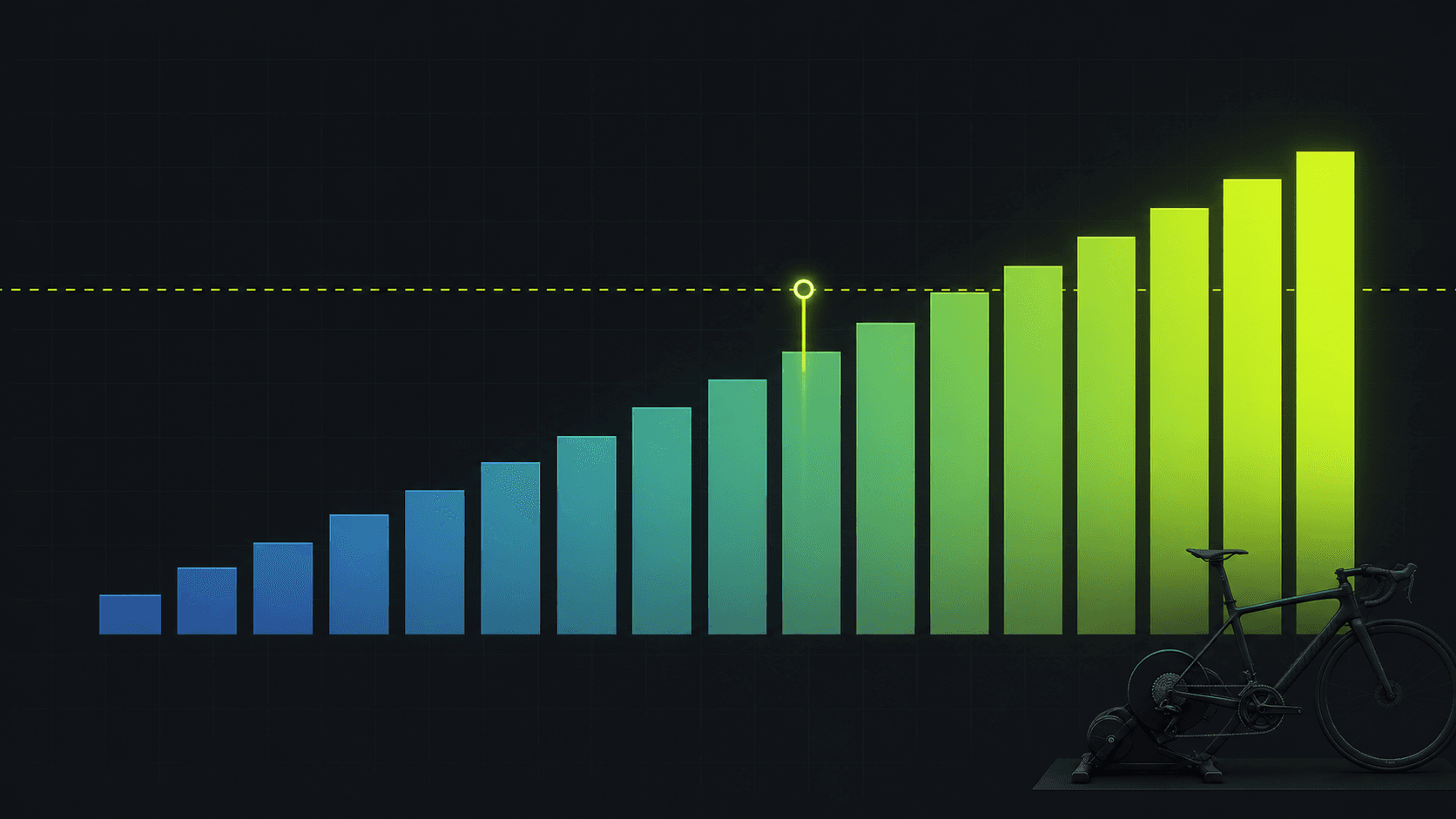
A 20-minute FTP test is one hard, steady effort. It gives you a starting point for power-based workouts. The goal is not a heroic number. It is a number that makes next week's workout make sense.
Ride the test in resistance, slope, or level mode so you control the pace. Warm up properly. Hold the best steady effort you can for 20 minutes. Then multiply your average test power by 0.95 to get an estimated FTP.
The direct answer
Set up your smart trainer, fan, and power source as you normally would. Warm up for around 30 minutes. Ride 20 minutes as hard as you can hold without going bang early. Cool down. Then find the average power for just that interval and multiply it by 0.95.
Do not use ERG mode for the 20-minute test effort. ERG is excellent when a workout gives you a target. A test asks you to discover the target, so use a mode where you can raise or lower power yourself. Save ERG for the workouts you set from the result. If that distinction is new, read ERG mode explained.
Set up once, then keep it repeatable
Use the trainer and power source you plan to use for workouts. Put a strong fan in front of you. Keep a drink close. Use the same bike position and tyre or trainer setup when you retest. If your trainer has a normal calibration routine, follow it before the ride.
Avoid testing after a very hard ride, a bad night, or when you feel unwell. This is not a toughness contest. You are checking where your fitness is today.
| Part | What to do | Why it matters |
|---|---|---|
| Warm-up | Ride easily for about 30 minutes. Add a few short harder efforts if you normally use them. | You want ready legs, not a cold start. |
| Test effort | Ride 20 minutes in resistance, slope, or level mode at the hardest steady power you can hold. | You need to choose the pace yourself. |
| Pacing | Start controlled. Check in every five minutes. Make small changes only. | Going too hard early ruins the final minutes. |
| Cooldown | Pedal easily for 10 to 15 minutes. | It lets your body settle before you judge the ride. |
| Calculation | Average the 20-minute interval only, then multiply by 0.95. | That gives the common FTP estimate. |
- Part
- Warm-up
- What to do
- Ride easily for about 30 minutes. Add a few short harder efforts if you normally use them.
- Why it matters
- You want ready legs, not a cold start.
- Part
- Test effort
- What to do
- Ride 20 minutes in resistance, slope, or level mode at the hardest steady power you can hold.
- Why it matters
- You need to choose the pace yourself.
- Part
- Pacing
- What to do
- Start controlled. Check in every five minutes. Make small changes only.
- Why it matters
- Going too hard early ruins the final minutes.
- Part
- Cooldown
- What to do
- Pedal easily for 10 to 15 minutes.
- Why it matters
- It lets your body settle before you judge the ride.
- Part
- Calculation
- What to do
- Average the 20-minute interval only, then multiply by 0.95.
- Why it matters
- That gives the common FTP estimate.
How to pace the 20 minutes
The first two minutes should feel hard but calm. You should think, “I can hold this,” not, “I have to save this.” Get near your pace, then settle. Watch the average power for the interval. Instant power jumps around with every pedal stroke.
At five, 10, and 15 minutes, ask: can I hold this without falling apart? If not, lower power a little. If you feel oddly comfortable at 15 minutes, lift it slightly. The last five minutes should bite. You should not finish with a huge sprint that makes the first 15 minutes look easy.
Use a cadence that feels normal for you. There is no magic rpm. The goal is a stable effort you can reproduce, not a new technique experiment.
Calculate the result, then round for real life
Take the average power from the 20-minute interval only. Multiply it by 0.95.
Example: 250 W × 0.95 = 237.5 W. Your estimated FTP is about 238 W.
The 95% number is a convention for estimating FTP from a shorter effort, not proof that your FTP is exactly 238 W. Heat, cooling, pacing, fatigue, equipment, and your own short-duration strengths all affect the result. Enter it in the FTP calculator, then use the workout targets as a starting point.
Use the number, do not worship it
Use the estimate to scale endurance, tempo, sweet-spot, threshold, and harder sessions. Your next few workouts tell you whether it fits. If a sensible threshold session feels impossible from the first interval, lower the FTP setting a little. If several sessions feel too easy, raise it carefully or retest when rested.
MINI WATT fits this workflow if you use a compatible smart trainer and want FTP-based structured rides. Check Bluetooth FTMS smart-trainer compatibility first, then use a recent estimate for your first sessions.
Action plan: test this week in 4 steps
- 1
Pick a rested day and set up your normal bike, trainer, fan, and drink.
- 2
Warm up for about 30 minutes, then begin a 20-minute effort in resistance, slope, or level mode.
- 3
Ride steadily, make small changes only, cool down, and calculate 95% of the interval average.
- 4
Put the estimate in the FTP calculator. Ride two or three structured sessions before changing it.
Common mistakes
Starting like a two-minute sprint
Settle into hard, controlled pressure instead. A fast start usually costs more power later.
Testing in ERG mode
ERG needs a target. Use a self-paced trainer mode for the test and use ERG after you have a starting FTP.
Counting the warm-up in the average
Select only the timed 20-minute interval before doing the 95% calculation.
Skipping cooling and ventilation
Indoor heat can change the effort. Use a fan and repeat the conditions as closely as you can.
Treating one test as permanent
It is a snapshot, not a tattoo. Recheck it when training, recovery, or life has clearly changed.
FAQ
What is the 20-minute FTP test formula?
Multiply average power for the 20-minute effort by 0.95. The result is an estimated FTP, not an exact laboratory measurement.
Should I use ERG mode for a 20-minute FTP test?
No. Use resistance, slope, or level mode for the test so you can pace your own effort. Use ERG later for workouts built from the result.
How long should I warm up before a 20-minute FTP test?
About 30 minutes is a practical starting point. Keep the routine similar whenever you retest.
What cadence should I use?
Use a cadence that feels normal and sustainable for you. Stability matters more than copying another rider's rpm.
Can I do the test on any smart trainer?
You need reliable power data and a mode that lets you self-pace. For FTP-based ERG workouts afterward, confirm [Bluetooth FTMS compatibility](/blog/bluetooth-ftms-smart-trainer-compatibility).
What if I start too hard?
Lower the effort enough to regain control and finish the 20 minutes. Note the pacing error and repeat the same protocol on another rested day if the result does not fit your workouts.
Is 95% of 20-minute power my real FTP?
It is a common estimate. Your response to sustained workouts is the practical check on whether it is a good setting today.
How often should I retest FTP?
Retest when your training block, fitness, or workout feel has clearly changed. Keep the protocol and equipment consistent so comparisons mean something.
Why is my indoor FTP lower than an outdoor result?
Cooling, motivation, position, trainer setup, and pacing can all differ. Compare like with like rather than forcing two conditions to match.
What should I do after the test?
Enter the result in the [FTP calculator](/tools/ftp-calculator), start with realistic structured sessions, and adjust only after you see how repeatable targets feel.
Sources
- TrainerRoad: FTP Testing Tips and Strategy, accessed 2026-07-28
- TrainingPeaks: What Is Functional Threshold Power?, accessed 2026-07-28
- MINI WATT Workouts, accessed 2026-07-28
- MINI WATT download, accessed 2026-07-28
Related Articles
What Is Watts Per Kilogram in Cycling And Why Does It Matter?
A clear, practical explanation of W/kg calculations, climbing versus flat-road performance, FTP benchmarks, measurement limits, and sustainable improvement.
Ramp Test vs 20-Minute FTP Test: Which One Should You Use?
A clear comparison of ramp and 20-minute FTP tests that prioritizes pacing skill, mental load, repeatability, and honest workout adjustment.