
Ramp Test vs 20-Minute FTP Test: Which One Should You Use?
Choose a ramp or 20-minute FTP test by how you ride, how you pace, and whether the result makes your workouts feel right.
Published
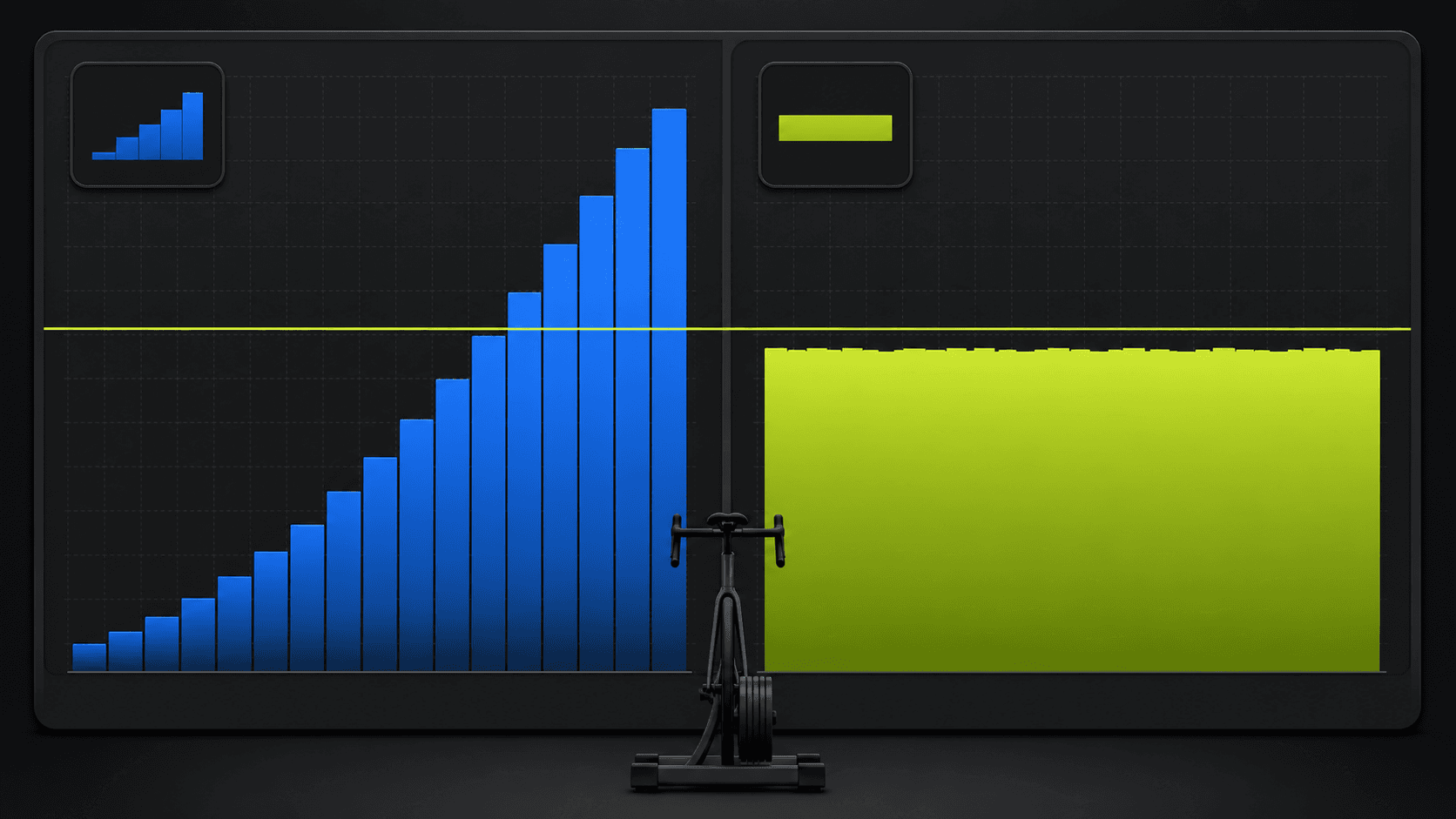
Choose the ramp test if you want a shorter test with almost no pacing decisions. Choose the 20-minute FTP test if you can settle into one long, hard effort. Neither wins for every rider.
Both give you a starting number for workouts. The better test is the one you can ride honestly, repeat in similar conditions, and use without making every threshold session feel silly.
The direct answer
If you are new to power testing, dislike judging a 20-minute effort, or only have a short slot indoors, start with a ramp test in the app that supplies it. You follow rising targets until you cannot continue. It is mentally simple, although the end is very hard.
If you regularly ride sustained climbs, time trials, long race efforts, or steady trainer intervals, the 20-minute test can suit you. It asks for more judgment: start too hard and you fade; start too easy and the final sprint can overstate the result.
For the full self-paced protocol, use this 20-minute FTP test at home. Once you choose, put the result into the FTP calculator.
| Question | Ramp test | 20-minute FTP test |
|---|---|---|
| What you do | Follow one-minute rising steps until you cannot hold the target. | Ride one hard, self-paced 20-minute effort. |
| Typical estimate | TrainerRoad uses about 75% of best one-minute power in its protocol. | The common calculation is 95% of average 20-minute power. |
| Pacing skill | Low. Follow the targets and keep going until you cannot. | High. You must find a hard steady pace and avoid big swings. |
| Mental load | Shorter, but the end gets very sharp. | Longer discomfort and more decisions while tired. |
| Best first fit | Riders new to testing or short on time. | Riders comfortable with long hard efforts and pacing. |
| Main limitation | Short-duration strength can influence the estimate. | A pacing error, heat, or early surge can influence the estimate. |
- Question
- What you do
- Ramp test
- Follow one-minute rising steps until you cannot hold the target.
- 20-minute FTP test
- Ride one hard, self-paced 20-minute effort.
- Question
- Typical estimate
- Ramp test
- TrainerRoad uses about 75% of best one-minute power in its protocol.
- 20-minute FTP test
- The common calculation is 95% of average 20-minute power.
- Question
- Pacing skill
- Ramp test
- Low. Follow the targets and keep going until you cannot.
- 20-minute FTP test
- High. You must find a hard steady pace and avoid big swings.
- Question
- Mental load
- Ramp test
- Shorter, but the end gets very sharp.
- 20-minute FTP test
- Longer discomfort and more decisions while tired.
- Question
- Best first fit
- Ramp test
- Riders new to testing or short on time.
- 20-minute FTP test
- Riders comfortable with long hard efforts and pacing.
- Question
- Main limitation
- Ramp test
- Short-duration strength can influence the estimate.
- 20-minute FTP test
- A pacing error, heat, or early surge can influence the estimate.
Why the numbers can differ
The familiar 20-minute method is average power for the interval multiplied by 0.95. TrainerRoad's ramp protocol uses 75% of the best one-minute power, while noting that it can adjust the result when a rider does not follow the target closely.
These are estimates from different tests, not two paths to one secret true number. A ramp test can use different step sizes or a different formula depending on the app. Do not take a 75% rule from one platform and use it for every ramp file.
Your FTP setting is useful when it makes the intended workouts hard in the intended way, not when it wins an argument between test types.
The honest trade-offs
A ramp test is simple to begin because you do not choose the pace. Keep your cadence steady. Follow the rising target. Keep going until you cannot hold it. It suits riders who panic early or go too gently in a self-paced test.
The 20-minute test is closer to riding a long hard climb. It suits riders who know their own pace. It also shows poor cooling, fatigue, and pacing mistakes quickly. Add warm-up and cooldown and it takes longer too.
Neither test is magic. A rider with a big one-minute effort may get a ramp result that feels high for longer work. A cautious rider may leave too much in the tank in a 20-minute test. Nobody failed. The number just needs to meet real training.
Check the result against workouts
Use the same trainer, power source, fan, and test format when you retest. That makes a change easier to trust than switching methods and comparing raw numbers.
Then ride two or three suitable sessions. A threshold workout should be hard but doable with good pacing. Sweet-spot work should feel steady, not like a race. If you keep cracking, lower the setting a little. If several sessions feel plainly too easy, raise it carefully or retest.
For smart-trainer workouts, understand ERG mode before you decide the trainer is at fault. ERG holds a target but it cannot make an unrealistic FTP setting sensible.
Action plan: choose in 4 steps
- 1
Pick a ramp test if pacing is the biggest barrier. Pick the 20-minute test if you can hold a hard steady effort without big surges.
- 2
Use one protocol, one trainer, and one cooling setup for the next test block.
- 3
Calculate the result in the FTP calculator and begin with realistic workouts.
- 4
Let workout feel guide a small adjustment. Do not chase a bigger number because another test produced it.
Common mistakes
Calling one test universally better
Pick for your experience, time, and ability to pace rather than internet consensus.
Applying 75% to every ramp test
Ramp protocols vary. Use the formula provided by the specific app or test.
Starting a 20-minute test too hard
Build quickly but in control, then make small adjustments rather than repeated surges.
Stopping a ramp test by choice
Follow the prescribed target until you genuinely cannot maintain it.
Switching test type every month
Trends become harder to read when the protocol keeps changing.
Treating a result as a verdict
It is a starting setting. Check it against honest structured rides.
FAQ
Is a ramp test or 20-minute test more accurate?
Neither is universally more accurate. Both estimate FTP, and the better choice is the one you can perform and repeat consistently.
Which FTP test is better for beginners?
A ramp test is often easier to start because it removes most pacing decisions. The last minutes still require a full effort.
Why can ramp and 20-minute results be different?
They use different effort durations and conversion rules. Your pacing and your short-duration versus sustained strengths can influence each estimate.
What is the ramp-test FTP formula?
TrainerRoad uses about 75% of best one-minute power for its ramp protocol. Other apps may use a different protocol or calculation.
What is the 20-minute FTP formula?
Multiply average power for the 20-minute test interval by 0.95. The result is an estimate.
Should I use ERG mode for a 20-minute FTP test?
No. Use a self-paced trainer mode for the effort. ERG is better suited to workout targets set after the test.
Can I use ERG mode for a ramp test?
Yes, if the test protocol is designed for it and your trainer follows the steps reliably. Follow the app's instructions and keep cadence steady.
How often should I use the same FTP test?
Keep the same protocol whenever you want to compare change over time. Retest after a meaningful training block or when workout targets no longer fit.
What if the result makes workouts too hard?
Lower the FTP setting a little after more than one honest workout points the same way. Then revisit the protocol and conditions before the next test.
What if I prefer long rides but only have 30 minutes?
A ramp test may be the more practical option. A useful estimate you can complete consistently beats an ideal protocol you never schedule.
Sources
- TrainerRoad: FTP Testing Tips and Strategy, accessed 2026-07-28
- TrainerRoad: How to Test With the Ramp Test, accessed 2026-07-28
- TrainerRoad: How to Get Your Best FTP Test Results, accessed 2026-07-28
- MINI WATT Workouts, accessed 2026-07-28
Related Articles
What Is Watts Per Kilogram in Cycling And Why Does It Matter?
A clear, practical explanation of W/kg calculations, climbing versus flat-road performance, FTP benchmarks, measurement limits, and sustainable improvement.
How to Do a 20-Minute FTP Test at Home on a Smart Trainer
A repeatable home 20-minute FTP-test protocol with setup, warm-up, pacing, cooldown, the 95% estimate, and an honest workout check.