
Indoor Cycling Training During Winter: How To Keep Your Fitness
A simple winter indoor cycling training plan with short structured rides, beginner workouts, and one practical 30 minute session.
Published
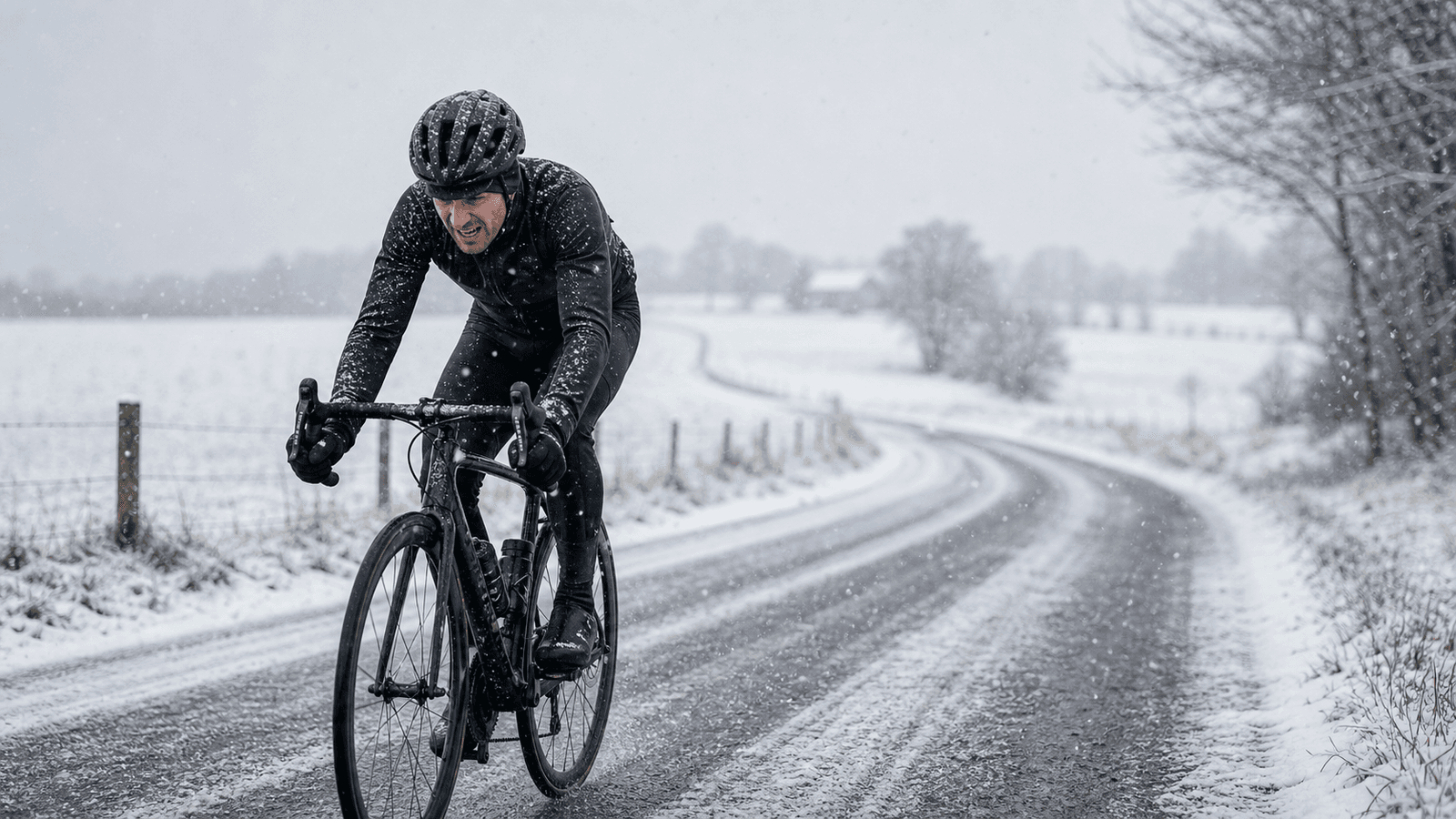
Winter makes the riding week smaller. The days get short, roads stay wet, cold rides take more kit, and motivation drops when every outdoor session feels like a negotiation. The fear is simple: you do not want to lose the legs you built outside.
Good indoor cycling training solves that by being simple and repeatable. You do not need a perfect pain cave, six rides per week, or a hard workout every time you clip in. The useful winter plan is the one you can repeat when the weather, work, and daylight are all against you.
What indoor cycling training should do in winter
Winter training does not need to copy your best summer week. It should keep the important parts alive until outdoor riding becomes easier again.
First, it should maintain aerobic fitness. Cycling is still an aerobic sport, and your winter plan should keep steady endurance work in the week. That can be a 60 to 90 minute indoor ride, but it can also be several shorter touchpoints when work, family, and weather make long rides unrealistic.
Second, it should keep power and cadence familiar. Indoor rides are good for this because the environment is controlled. You can practise holding a steady effort, watch cadence, and notice when your pedal stroke gets rough. If cadence feels choppy, spend a few minutes on how to pedal smoothly before adding more intensity.
Third, it should add structure without burnout. A useful winter week usually has one or two key sessions, one longer aerobic ride, and easy spinning or rest around them. That is enough structure to stop random riding, but not so much that every ride feels like a test.
The goal is not to arrive in spring as a different rider. The goal is to make spring riding feel less like starting over.
Simple weekly cycling training plan
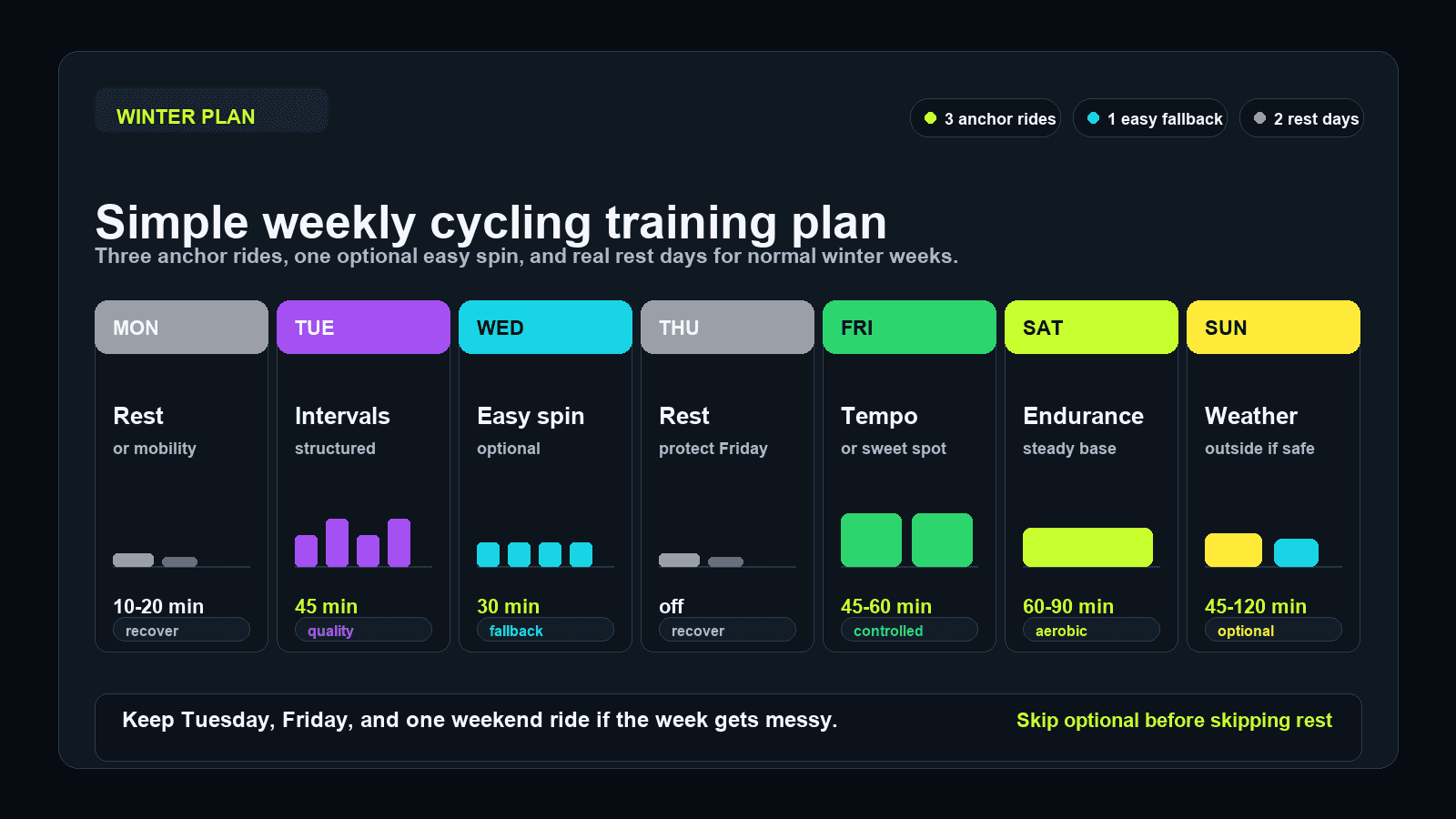
Use this cycling training plan as a starting point, not a law. If you only manage three rides, keep Tuesday, Friday, and the weekend endurance ride. If you are tired, skip the optional easy spin before you skip rest.
| Day | Workout | Duration | Goal |
|---|---|---|---|
| Monday | Rest or mobility | 10 to 20 min | Recover from the weekend and keep the habit light. |
| Tuesday | Structured intervals | 45 min | One focused quality ride with clear targets. |
| Wednesday | Optional easy spin | 30 min | Keep the legs moving without adding much fatigue. |
| Thursday | Rest | Off | Protect recovery so Friday is useful. |
| Friday | Tempo or sweet spot | 45 to 60 min | Controlled pressure below race-hard effort. |
| Saturday or Sunday | Longer endurance ride | 60 to 90 min | Maintain aerobic fitness and steady cadence. |
| Optional weather window | Outdoor ride if roads are safe | 45 to 120 min | Keep real-road handling and motivation in the week. |
- Day
- Monday
- Workout
- Rest or mobility
- Duration
- 10 to 20 min
- Goal
- Recover from the weekend and keep the habit light.
- Day
- Tuesday
- Workout
- Structured intervals
- Duration
- 45 min
- Goal
- One focused quality ride with clear targets.
- Day
- Wednesday
- Workout
- Optional easy spin
- Duration
- 30 min
- Goal
- Keep the legs moving without adding much fatigue.
- Day
- Thursday
- Workout
- Rest
- Duration
- Off
- Goal
- Protect recovery so Friday is useful.
- Day
- Friday
- Workout
- Tempo or sweet spot
- Duration
- 45 to 60 min
- Goal
- Controlled pressure below race-hard effort.
- Day
- Saturday or Sunday
- Workout
- Longer endurance ride
- Duration
- 60 to 90 min
- Goal
- Maintain aerobic fitness and steady cadence.
- Day
- Optional weather window
- Workout
- Outdoor ride if roads are safe
- Duration
- 45 to 120 min
- Goal
- Keep real-road handling and motivation in the week.
For normal cyclists, this is enough work. You are not trying to live like a stage racer in February. You are trying to keep the bike in your week when winter pushes back.
Best indoor cycling workouts for winter
The best indoor cycling workouts for winter are short enough to repeat and clear enough that you know why you are doing them.
- 30 minute easy endurance ride: Ride easy from start to finish. Keep cadence comfortable, breathing calm, and pressure light. This is the ride that keeps the habit alive.
- 30 minute cadence control workout: Ride easy, then change cadence by 5 to 10 rpm every few minutes while keeping the same calm effort. This helps you stay smooth without making the session hard.
- 45 minute ERG interval workout: Use ERG mode for controlled blocks, such as 3 x 6 to 8 minutes at tempo or sweet spot with easy recovery. Let the trainer hold the target while you keep cadence steady.
- 60 minute winter base ride: Hold an endurance effort for most of the ride. Add a short tempo block only if you feel fresh. The point is steady aerobic work, not proving something.
Keep the hard work honest, but do not make it dramatic. If you finish every indoor ride wrecked, the plan will not last.
30 minute indoor cycling workout
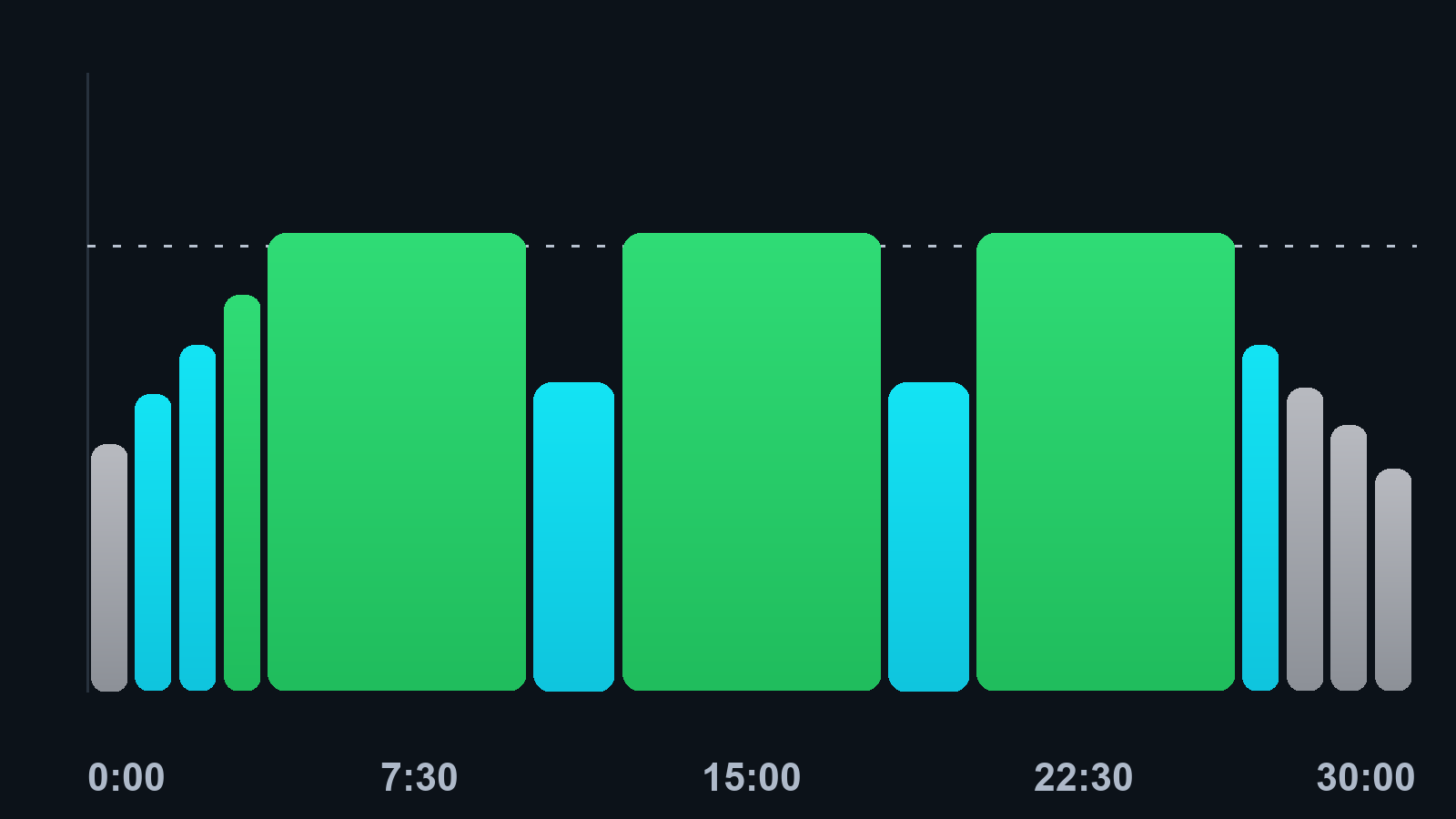
Use this 30 minute indoor cycling workout when you want a useful midweek session without turning the whole evening into training.
- 5 min warm-up: Start easy. Let cadence settle before adding pressure.
- 3 x 6 min steady effort: Ride at a controlled tempo effort, around 6 to 7 out of 10. You should be working, not gasping.
- 2 min easy between each steady effort: Spin lightly and keep the legs moving.
- 5 min cool-down: Back off until breathing is calm again.
That exact layout lands at about 32 minutes. If your timer has to stop at 30, make the warm-up and cool-down 4 minutes each.
The block preview shows the strict 30:00 version: a short ramp, three steady six-minute efforts, two easy recoveries, and a short cool-down.
This workout is for returning riders, busy outdoor cyclists, and anyone who wants a steady winter session without a high-intensity hit. It also works well in ERG mode because the targets are steady and the recoveries are simple.
Beginner cycling workouts
Cycling workouts for beginners should feel almost too simple at first. That is the point.
Start with two or three rides per week. Keep most sessions between 20 and 40 minutes. Use low to moderate intensity. If you are using perceived effort, most early rides should feel like 3 to 5 out of 10. You should finish thinking you could ride a little more.
Build consistency before chasing FTP. Power tests can be useful once you have a rhythm, but they are a poor first step if you are still learning the trainer, cadence, and indoor setup.
Learn how the trainer feels. In ERG mode, keep cadence steady and let the trainer meet the power target. Wahoo and TrainerRoad both warn that frequent cadence changes make the trainer adjust resistance more often, which can make intervals feel worse than they need to.
The beginner win is not a perfect file. It is showing up again next week.
When MINI WATT fits
MINI WATT fits riders who want focused winter cycling training without a full virtual world taking over the screen. It is a desktop indoor cycling app for smart trainers, with structured ERG workouts, real GPS route riding with smart-trainer resistance changes, visible ride data, Bluetooth FTMS smart trainers and common cycling sensors, and Strava-ready FIT exports.
When MINI WATT is not the right fit
MINI WATT is not the right fit if you want a coaching plan, AI coach, video route platform, social racing world, or group rides. It is also not a reason to buy hardware before you have the habit.
Action plan: Start your winter cycling training plan
- 1
Pick three anchor rides: Choose two midweek slots and one weekend slot that you can protect most weeks.
- 2
Keep one hard day: Use Tuesday or Friday for intervals, not both at full pressure.
- 3
Add one easy fallback: Keep a 30 minute ride ready for busy days so the week does not collapse.
- 4
Review after two weeks: If you are finishing rides tired but not crushed, add time slowly. If you dread the trainer, reduce intensity first.
- 5
Buy only after the habit exists: A smart trainer and app can help, but they should support the routine, not replace it.
Common mistakes to avoid
- Going too hard every ride: One harder workout per week is enough for many winter weeks. Make the other rides controlled.
- Skipping the warm-up: Indoor intervals feel worse when you jump straight to target power. Give the legs a few easy minutes first.
- Ignoring cadence: ERG mode works best when cadence stays calm. Wild cadence changes make the trainer chase you.
- Making the setup too complicated: If starting a ride takes 20 minutes, you will ride less. Keep the trainer, fan, bottle, towel, and app routine simple.
- Treating winter training like punishment: A short controlled ride is not a failure. It is how you keep fitness when outdoor riding is messy.
- Buying hardware before building a habit: If you already ride consistently and want automatic resistance, a budget smart trainer for structured workouts can make sense. If you do not ride yet, start with the routine first.
FAQ
Is indoor cycling training good for winter?
Yes. Indoor cycling training is useful in winter because it removes the biggest barriers: darkness, bad weather, cold roads, and inconsistent outdoor time. It works best when you use it for steady aerobic work, controlled intervals, and repeatable weekly habits.
How many indoor cycling workouts should I do per week?
Many riders can maintain useful fitness with three indoor cycling workouts per week, especially if they include one quality workout, one controlled tempo or sweet spot ride, and one endurance ride. Add an easy fourth ride only if recovery is good.
Can I maintain cycling fitness with 30 minute rides?
Yes, 30 minute rides can help maintain cycling fitness when they are consistent. They are not a full replacement for every long ride, but they are far better than waiting all week for a perfect outdoor window that never comes.
What is the best indoor cycling workout for beginners?
The best beginner workout is a short easy endurance ride. Start with 20 to 30 minutes at a pace where you can breathe calmly and hold steady cadence. Once that feels normal, add one short steady block, such as 2 x 5 minutes at moderate effort.
Should I use ERG mode for winter training?
ERG mode is useful for structured winter workouts because the smart trainer holds the power target for each interval. Use it for steady intervals, tempo, sweet spot, and endurance targets. Turn it off or be careful with it for cadence drills, sprints, or any workout where the trainer cannot change resistance quickly enough.
Do I need a smart trainer?
No. You can start winter indoor cycling on a basic trainer or indoor bike using time, cadence, heart rate, or perceived effort. A smart trainer becomes useful when you want ERG mode, automatic resistance changes, route riding, and cleaner power-based workouts.
Is indoor cycling as good as outdoor cycling?
Indoor cycling is excellent for controlled training. Outdoor cycling is still better for handling, wind, braking, cornering, group skills, and real-road confidence. A good winter plan can use indoor rides for fitness and outdoor rides whenever the roads are safe.
How do I avoid getting bored indoors?
Keep sessions short, give every ride a purpose, and avoid making the setup a project. Use structured workouts, route riding, music, race replays, or a simple overlay with the numbers you need. Boredom often gets worse when the ride is too long and too vague.
Should winter cycling training be hard?
Some of it should be hard, but not all of it. One harder workout per week is enough for many normal cyclists during winter. Most rides should feel controlled so you can repeat the plan for months, not just survive one big week.
What app should I use for structured indoor cycling?
Use a structured indoor cycling app that matches how you train. MINI WATT fits riders who want structured ERG workouts, real route riding, visible ride data, a floating workout bar, and a lightweight desktop setup. If you want full coaching plans, social racing, group rides, or video routes, choose an app built around those features.
Sources
- MINI WATT homepage, accessed 2026-06-05
- MINI WATT Workouts, accessed 2026-06-05
- MINI WATT Routes, accessed 2026-06-05
- Download MINI WATT, accessed 2026-06-05
- A Guide to using ERG mode, accessed 2026-06-05
- Erg Mode Explained, accessed 2026-06-05
- How often should I ride my bike to get fit?, accessed 2026-06-05
- Ask a coach: How can I get fit on three workouts a week?, accessed 2026-06-05
- Indoor cycling training plans, accessed 2026-06-05
- Indoor Cycling Plan: Tips You Need to Maintain Your Fitness, accessed 2026-06-05
- Indoor cycling mistakes: 10 things we all get wrong, and tips on how to solve them, accessed 2026-06-05
Related Articles
Stationary Bike Workout for Weight Loss: What Actually Works Indoors
A realistic indoor bike weight-loss guide with the main answer upfront, calorie deficit basics, a 3 to 5 ride weekly plan, a 30 minute workout, food anchors, mistakes, FAQ, and MINI WATT fit limits.
Indoor Cycling Workouts: 30, 45 and 60-Minute Smart-Trainer Sessions
A choose-by-time guide with three conservative FTP-scaled session outlines for busy days, focused quality, and steady endurance.