
Stationary Bike Workout for Weight Loss: What Actually Works Indoors
A realistic stationary bike workout for weight loss with a 30 minute ride, weekly plan, calorie deficit basics, food habits, and common mistakes.
Published
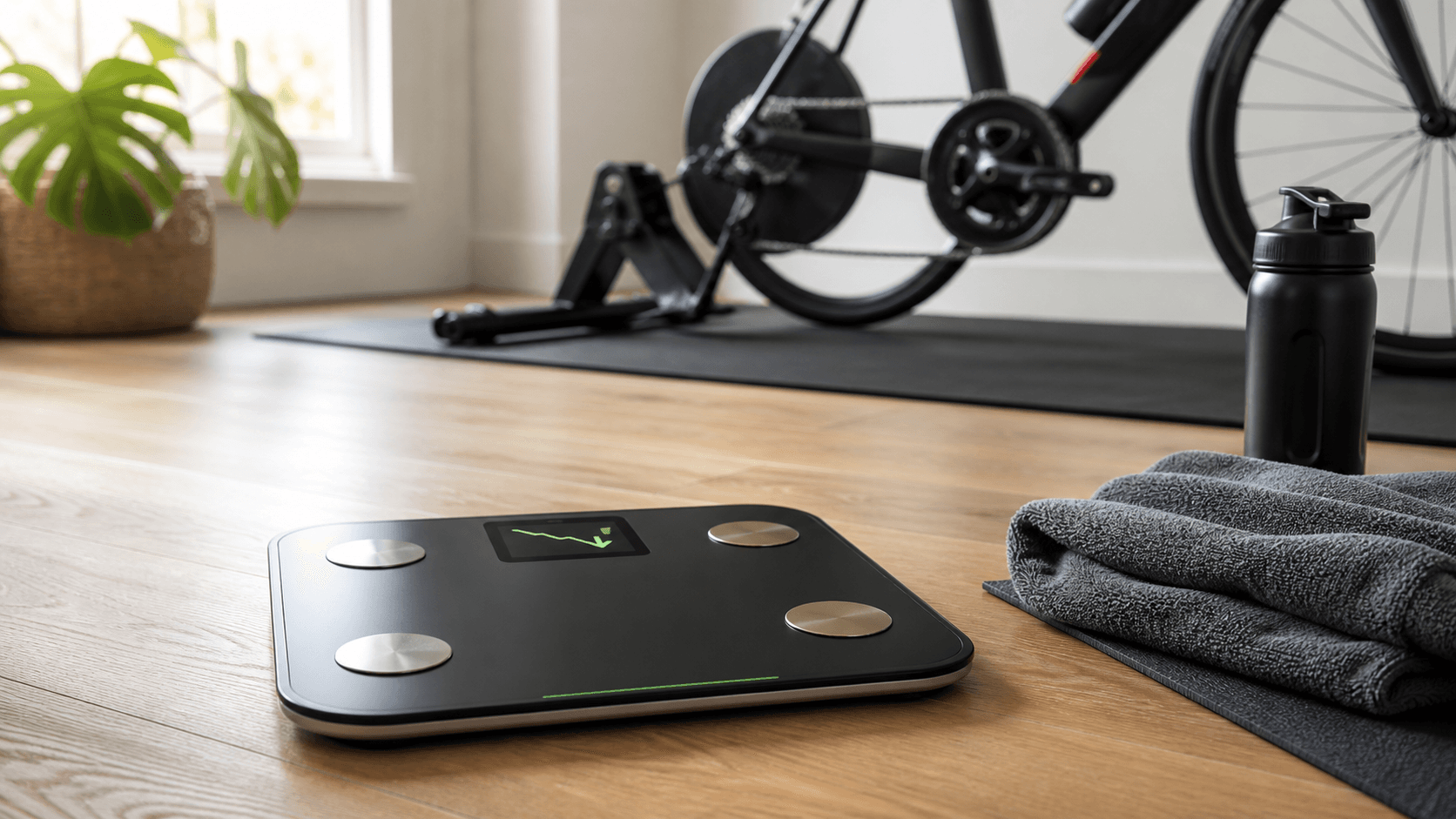
A stationary bike workout for weight loss works when it helps you ride often enough to support a calorie deficit you can actually live with.
That is the honest answer. A bike in the spare room is not magic. But it removes a lot of friction: no weather, no traffic, no route planning, no lights, and no debate about whether the roads are safe.
The main plan is simple: ride 3 to 5 times per week, keep most rides easy to steady, add one controlled harder session, do some strength work, and match the riding with food habits that create a small calorie deficit.
The indoor bike helps because it makes the riding part repeatable. The weight loss still comes from the whole week.
Quick safety note: this is general fitness information, not medical advice. If you have a health condition, are pregnant, are injured, take medication that affects exercise or weight, or have a history of disordered eating, speak with a qualified professional before starting a weight-loss plan.
The main answer
The best exercise bike workout for weight loss is not the hardest ride you can survive once.
It is the ride pattern you can repeat next week.
Use indoor cycling to increase the calories you use, improve fitness, and make movement easier to keep in your week. The CDC explains that using calories through physical activity, combined with reducing calories eaten, creates the calorie deficit that results in weight loss.
That last part matters. If the bike says you burned 500 calories, then you add a big snack because you feel like you earned it, that ride may not help the weekly deficit in the way you expected.
So think in two tracks:
- Training track: Ride often enough to build the habit and support health.
- Food track: Eat in a way that creates a small deficit without making you miserable.
You need both tracks. The bike makes one of them easier.
Why indoor cycling helps with weight loss
Indoor cycling for weight loss works best for practical reasons.
You can start a ride in five minutes. You can ride at the same time every morning or evening. You can repeat the same session and see whether it feels easier. You can ride when it is dark, wet, hot, cold, or windy outside.
That consistency matters more than the exact model of bike.
Physical activity also does more than burn calories. The CDC links regular activity with better sleep, reduced high blood pressure, lower risk of heart disease and stroke, lower risk of type 2 diabetes, fewer symptoms of depression and anxiety, and better ability to handle daily tasks.
That is useful even when the scale moves slowly.
For weight loss, though, the food side still carries a lot of the load. The CDC notes that most weight loss comes from decreasing calories, while regular physical activity is important for keeping weight off.
So the bike is not a loophole. It is a tool that helps you repeat the movement part.
The stationary bike calorie deficit, without the nonsense
A stationary bike calorie deficit means your total week uses more energy than you take in.
That can come from eating a little less, moving a little more, or both. The sensible version is boring: fewer high-calorie extras, more filling meals, regular rides, and enough recovery.
Do not build the plan around one workout estimate.
Calorie burn changes with rider size, duration, intensity, power data, and the device or app doing the math. CDC calorie tables label activity calories as approximate and note that a person who weighs more than 154 lb usually uses more calories than the table value, while a lighter person uses less.
Platforms also calculate calories in different ways. Strava says calorie calculations are estimates, and that different algorithms and inputs can be used.
Use the number as context. Do not treat every estimated calorie as permission to add more food.
A simple weekly plan for 3 to 5 rides
Start with the 3 ride week if you are new, returning, or unsure how your body will handle the routine. Add rides only when the current week feels repeatable.
This is a starter plan, not a claim that 3 short rides meet every health guideline. The CDC adult guidance recommends at least 150 minutes of moderate-intensity activity per week, or 75 minutes vigorous, plus 2 days of strength work. Build toward that gradually if it fits your health, schedule, and recovery.
| Day | 3 rides per week | 4 rides per week | 5 rides per week |
|---|---|---|---|
| Monday | Rest or easy walk | Rest or easy walk | Rest or easy walk |
| Tuesday | 30 minute steady ride | 30 minute steady ride | 30 minute steady ride |
| Wednesday | Strength work | Strength work | 20 to 30 minute easy spin |
| Thursday | Rest | 30 to 40 minute easy ride | Strength work |
| Friday | 30 minute intervals | 30 minute intervals | 30 minute intervals |
| Saturday | Rest, walk, or mobility | Rest, walk, or mobility | 30 to 45 minute easy ride |
| Sunday | 45 to 60 minute easy ride | 45 to 60 minute easy ride | 45 to 60 minute easy ride |
- Day
- Monday
- 3 rides per week
- Rest or easy walk
- 4 rides per week
- Rest or easy walk
- 5 rides per week
- Rest or easy walk
- Day
- Tuesday
- 3 rides per week
- 30 minute steady ride
- 4 rides per week
- 30 minute steady ride
- 5 rides per week
- 30 minute steady ride
- Day
- Wednesday
- 3 rides per week
- Strength work
- 4 rides per week
- Strength work
- 5 rides per week
- 20 to 30 minute easy spin
- Day
- Thursday
- 3 rides per week
- Rest
- 4 rides per week
- 30 to 40 minute easy ride
- 5 rides per week
- Strength work
- Day
- Friday
- 3 rides per week
- 30 minute intervals
- 4 rides per week
- 30 minute intervals
- 5 rides per week
- 30 minute intervals
- Day
- Saturday
- 3 rides per week
- Rest, walk, or mobility
- 4 rides per week
- Rest, walk, or mobility
- 5 rides per week
- 30 to 45 minute easy ride
- Day
- Sunday
- 3 rides per week
- 45 to 60 minute easy ride
- 4 rides per week
- 45 to 60 minute easy ride
- 5 rides per week
- 45 to 60 minute easy ride
The strength work can be simple if those movements are appropriate for you. Think squats to a chair, hinges, step-ups, pushes, pulls, and core work that matches your ability.
If you are exhausted, cut the fifth ride before you cut sleep. If your knees, hips, back, or saddle area are getting angry, adjust the setup and reduce volume.
30 minute stationary bike workout
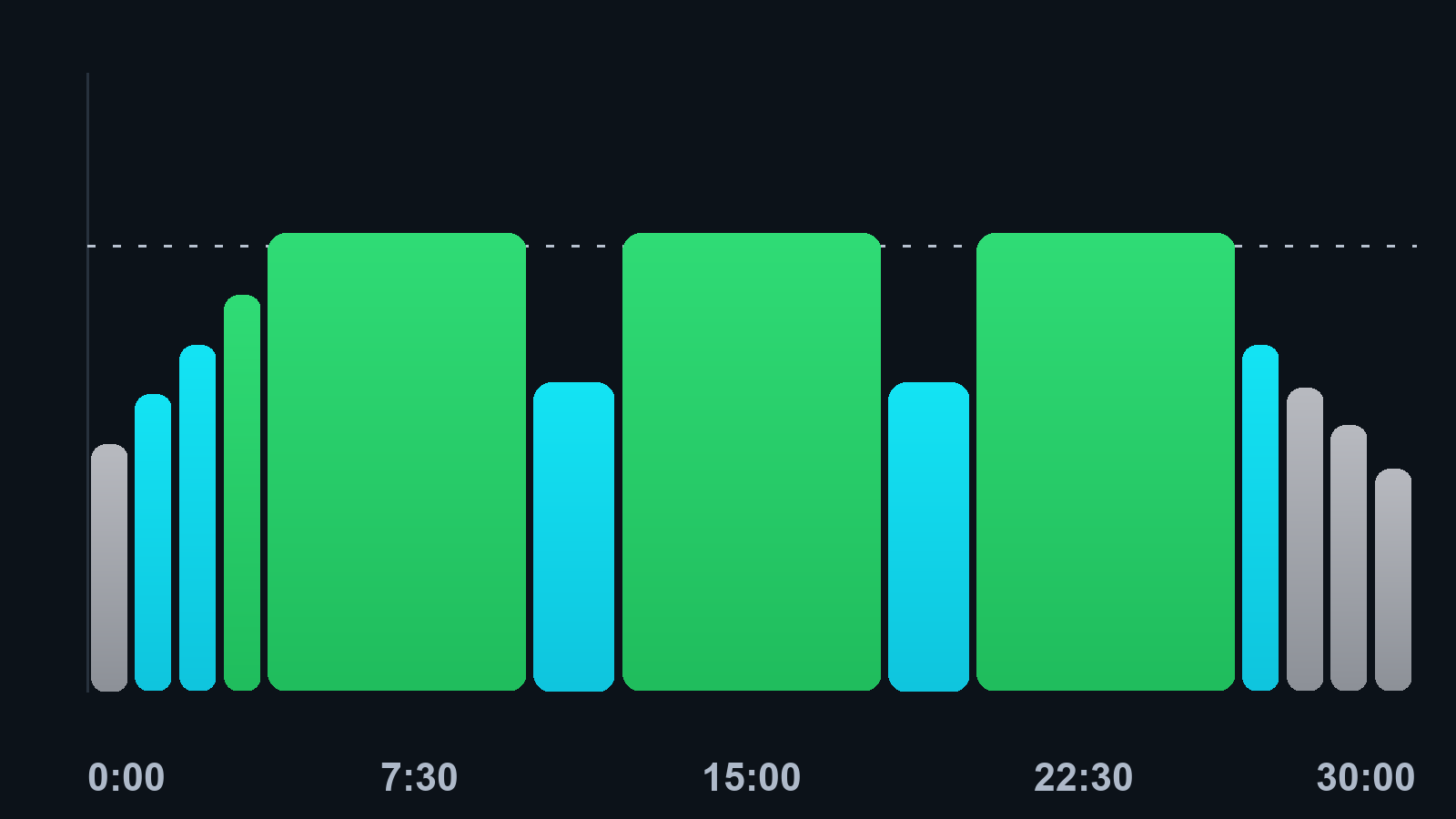
Use this 30 minute stationary bike workout when you want a repeatable session that is hard enough to feel useful, but not so hard that it ruins the next ride.
- 0:00 to 5:00: Easy warm-up. Keep cadence comfortable and breathing calm.
- 5:00 to 10:00: Build to steady. You should still be able to speak in short sentences.
- 10:00 to 14:00: Controlled hard effort. Aim for 7 out of 10, not a sprint.
- 14:00 to 16:00: Easy spin.
- 16:00 to 20:00: Controlled hard effort.
- 20:00 to 22:00: Easy spin.
- 22:00 to 26:00: Controlled hard effort.
- 26:00 to 30:00: Cool down until breathing settles.
If you use power, set the hard blocks at a target you can repeat for all three efforts. If you do not know your zones, use effort. You should finish tired, but not flattened.
If you want to estimate FTP for future power targets, use the MINI WATT FTP calculator after you have a few consistent weeks behind you.
How hard should the rides feel?
Most rides should feel almost too controlled.
For beginners, the useful habit is getting back on the bike. A ride that leaves you wrecked can look good in an app and still be a poor choice for weight loss because it makes the next ride less likely.
Use this simple feel:
- Easy ride: 3 to 4 out of 10. You can talk.
- Steady ride: 5 to 6 out of 10. You are working, but in control.
- Controlled hard block: 7 to 8 out of 10. Short sentences only.
- Max effort: keep this out of the early plan.
That mix gives you enough work to build fitness without turning every ride into a test.
Food basics: protein, fiber, and not eating back every calorie
You do not need a strange diet to make indoor trainer weight loss work.
Start with normal meals that make a calorie deficit easier to hold.
Protein helps your body repair cells and build new ones, according to MedlinePlus. For riders, a practical move is to include a protein food at meals: eggs, yogurt, fish, chicken, tofu, beans, lentils, soy foods, or similar options you already eat.
Fiber helps meals feel more filling. MedlinePlus lists fruits, vegetables, whole grains, legumes, nuts, and seeds as fiber sources, and recommends increasing fiber gradually.
That does not mean every meal needs to be perfect.
It means the easy default should be something like:
- A protein food.
- A high-fiber plant food.
- A carbohydrate amount that fits your ride and hunger.
- Enough fluid.
- Fewer liquid calories and snack calories that you barely notice.
The big mistake is eating back every estimated workout calorie. A tracker number is not precise enough for that. If weight is not changing over several weeks and you are training consistently, look at the food and drink pattern before adding more hard rides.
What progress should look like
Progress should feel a little boring.
The CDC says people who lose weight gradually and steadily, about 1 to 2 pounds per week, are more likely to keep it off than people who lose weight faster.
That does not mean everyone should chase that exact rate. Body size, training history, sleep, stress, medication, hormones, and health conditions can all affect weight change.
For a rider, useful progress can also look like:
- You ride 3 times per week without negotiation.
- The same 30 minute workout feels more controlled.
- Cadence is steadier.
- Easy rides feel easier.
- You stop needing a long recovery after every session.
- Your food routine feels less random.
The scale is one data point. The routine is the thing you are building.
When MINI WATT fits
MINI WATT fits if you use a Bluetooth smart trainer and want the riding part to be easier to repeat. It supports structured ERG workouts, visible power and cadence, route riding, a compact overlay for watching your workout data over other content, and FIT exports.
For this kind of plan, that means you can pick a steady session, let ERG mode hold the target, keep cadence visible, and repeat the same ride later without rebuilding the workout from scratch.
MINI WATT does not create the calorie deficit. It helps make the indoor riding part more consistent.
When MINI WATT is not the right fit
MINI WATT is not the right fit if you want a diet plan, a medical weight-loss program, a calorie coach, a group fitness class, or an app that tells you exactly what to eat.
It is also not required if you are happy riding a basic stationary bike by time and effort. The first job is the habit. Add software when it makes the habit easier.
Action plan: Start the next 2 weeks
- 1
Choose the 3 ride plan: Start with Tuesday, Friday, and Sunday for two weeks.
- 2
Do the 30 minute workout once per week: Keep it controlled enough that you can ride again.
- 3
Keep two food anchors: Add protein and a fiber-rich food to most meals.
- 4
Ignore exact calorie payback: Treat trainer calories as estimates and watch the weekly trend.
- 5
Review after 2 weeks: Add one easy ride only if energy, sleep, and joints feel fine.
Common mistakes
Chasing the biggest calorie number
The estimate may be wrong, and harder riding is not always better for consistency.
Eating back every workout calorie
Treat ride calories as context, not an exact food budget.
Going hard on every ride
Repeatable riding beats random exhaustion.
Skipping easy rides
Easy work helps build the habit and leaves room for the next session.
Expecting belly fat spot reduction
A bike cannot choose where fat loss happens first, and NIDDK warns against programs that promise weight loss in one body part.
Ignoring food quality
A stationary bike calorie deficit still depends on meals, drinks, snacks, and portions.
Dropping strength work
Adult activity guidance includes muscle-strengthening work, and riders benefit from more than pedaling.
Starting with five rides too soon
Begin with three rides if you are returning, then add volume slowly.
FAQ
Is a stationary bike workout good for weight loss?
Yes, it can be. A stationary bike helps with weight loss when it helps you ride consistently and supports a sustainable calorie deficit. It works best with sensible food habits, recovery, and a repeatable weekly plan.
How long should I ride a stationary bike to lose weight?
Start with 30 minutes, 3 times per week. Add time or a fourth ride after the routine feels normal. Very long rides are not required at the start.
Is a 30 minute stationary bike workout enough?
Yes, 30 minutes is enough for a useful session, especially if you repeat it several times per week. A 30 minute ride will not do everything by itself, but it is a strong building block.
How many days a week should I do indoor cycling for weight loss?
Most beginners should start with 3 rides per week. Move to 4 or 5 rides only if recovery is good and the extra ride does not push you into constant fatigue.
What is the best exercise bike workout for weight loss for beginners?
The best beginner workout is a steady 20 to 30 minute ride that you can repeat. Add short controlled hard blocks after the easy habit is in place.
Should I do HIIT or steady riding for weight loss?
Use both carefully. Steady rides are easier to repeat and recover from. One controlled interval day per week can help fitness, but constant HIIT is a common way to burn out.
Can an indoor trainer help with weight loss?
Yes, an indoor trainer can help because it makes rides repeatable and measurable. **Indoor trainer weight loss** still depends on the full week: food, riding, sleep, stress, and recovery.
Should I eat back calories from my exercise bike?
Not automatically. Trainer and app calorie numbers are estimates. If you eat back every estimated calorie, you may erase the deficit you were trying to create.
Can stationary bike workouts reduce belly fat?
They can help you lose weight overall if they support a calorie deficit, but they cannot target belly fat specifically. Avoid any plan that promises fat loss from one body part.
How does MINI WATT help with weight-loss riding?
MINI WATT helps make the riding part easier to repeat with structured ERG workouts, visible power and cadence, route riding, a compact overlay, and FIT exports. It does not cause weight loss or replace food habits.
Sources
- Steps for Losing Weight, accessed 2026-07-07
- Physical Activity and Your Weight and Health, accessed 2026-07-07
- Adult Activity: An Overview, accessed 2026-07-07
- Tips for Healthy Eating for a Healthy Weight, accessed 2026-07-07
- High-fiber foods, accessed 2026-07-07
- Protein in diet, accessed 2026-07-07
- Calorie Calculation, accessed 2026-07-07
- Choosing a Safe & Successful Weight-loss Program, accessed 2026-07-07
- MINI WATT, accessed 2026-07-07
- MINI WATT Workouts, accessed 2026-07-07
- MINI WATT Routes, accessed 2026-07-07
- Download MINI WATT 2.3.0 for Mac, accessed 2026-07-07
Related Articles
Indoor Cycling Training During Winter: How To Keep Your Fitness
A practical winter indoor cycling plan with three weekly anchor rides, beginner workout options, a 30 minute indoor cycling workout, and MINI WATT workflow fit.
Indoor Cycling Workouts: 30, 45 and 60-Minute Smart-Trainer Sessions
A choose-by-time guide with three conservative FTP-scaled session outlines for busy days, focused quality, and steady endurance.