
Gravel Bike vs Road Bike: Which One Should You Buy?
Gravel bike vs road bike, explained in plain English. Compare the surfaces, tyres, gears, comfort, and trainer setup that matter before you buy.
Published
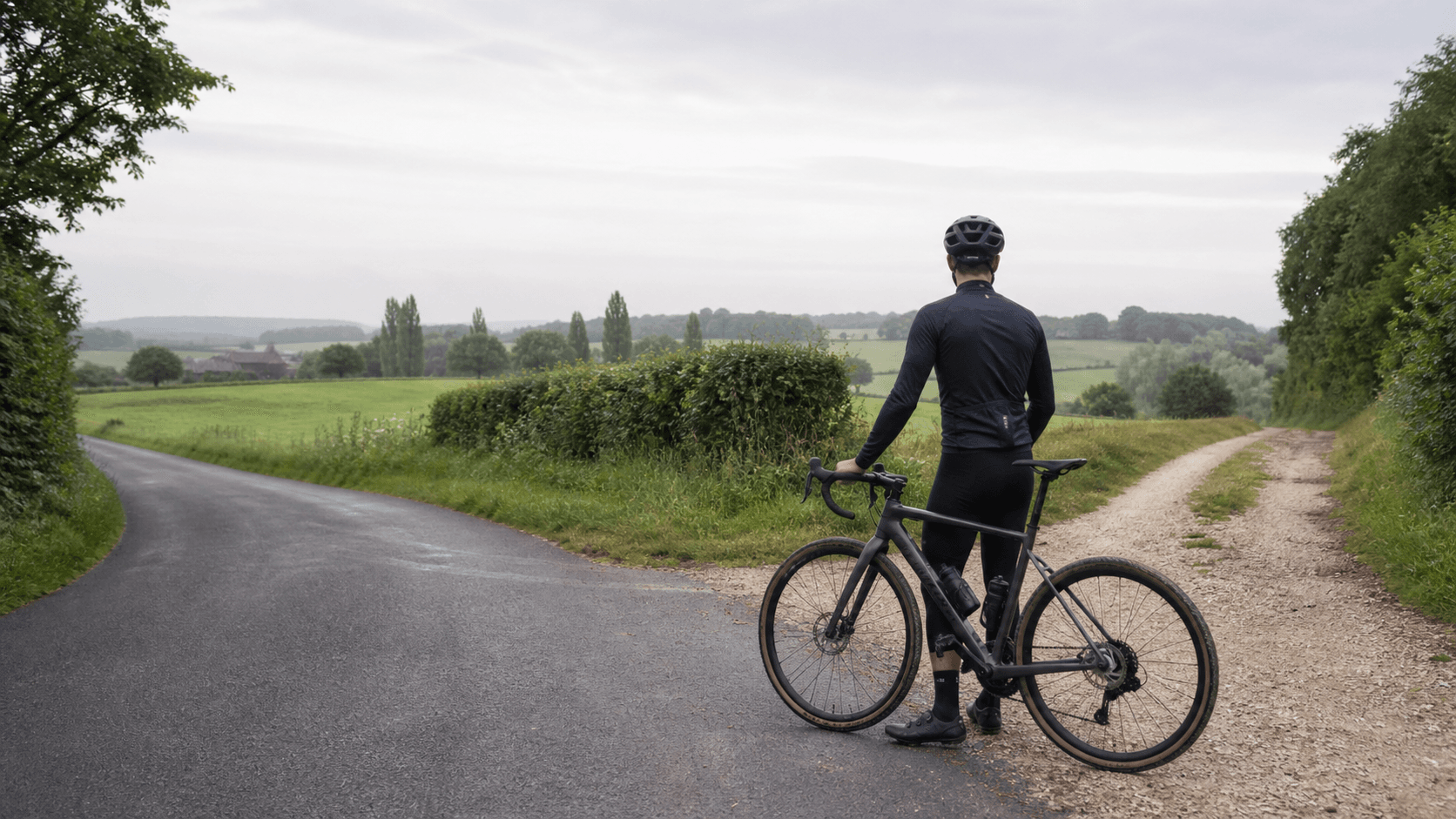
Choose a road bike if almost every ride is on paved roads and you care most about a quick, direct road feel. Choose a gravel bike if your usual route includes rough lanes, hard-packed tracks, loose gravel, or broken tarmac. It is the better tool when a road bike feels out of place.
That is the useful answer. Do not buy for the one adventurous route you might ride twice a year. Buy for the surface that fills most of your rides.
The gravel bike vs road bike choice gets much easier when you start with that one rule.
Road bike vs gravel bike: choose from your usual rides
| Your normal riding | Better first choice | Why |
|---|---|---|
| Smooth paved roads, fast group rides, road events | **Road bike** | It is built around paved-road riding and a direct road feel. |
| Paved lanes mixed with firm paths, rough roads, or gravel | **Gravel bike** | It gives you more scope to use tyres and a setup that suit less predictable surfaces. |
| Roads first, but comfort is a priority | **Endurance road bike** | It may keep the road focus while giving a more relaxed position and useful tyre clearance. |
| One bike for commuting, exploring, and weekend rides | **Gravel bike** | The extra flexibility can matter more than a pure road-bike feel. |
- Your normal riding
- Smooth paved roads, fast group rides, road events
- Better first choice
- **Road bike**
- Why
- It is built around paved-road riding and a direct road feel.
- Your normal riding
- Paved lanes mixed with firm paths, rough roads, or gravel
- Better first choice
- **Gravel bike**
- Why
- It gives you more scope to use tyres and a setup that suit less predictable surfaces.
- Your normal riding
- Roads first, but comfort is a priority
- Better first choice
- **Endurance road bike**
- Why
- It may keep the road focus while giving a more relaxed position and useful tyre clearance.
- Your normal riding
- One bike for commuting, exploring, and weekend rides
- Better first choice
- **Gravel bike**
- Why
- The extra flexibility can matter more than a pure road-bike feel.
If you are between two rows, look back at your last ten rides. Which surface made you slow down, turn around, or plan a different route? That is the problem your next bike should solve.
What really changes between the bikes
Tyres and clearance
The clearest difference is usually the room around the tyres. Gravel designs commonly leave more space for a larger tyre and for mud to clear the frame. Specialized's current gravel guide treats tyre clearance as a key part of mixed-surface riding, and Shimano's GRX parts use a wider chainline to improve tyre and mud clearance.
More room gives you more choices. You can use a faster, smoother tyre for firm routes or choose more volume and tread when the ground gets rough. It does not mean every gravel bike needs the widest tyre it can take.
Check the exact frame, fork, wheel, and tyre recommendation before changing size. A tyre that fits the rim can still be too close to the frame or fork. That is a safety check, not a detail to guess.
Position and handling
Do not assume every gravel bike is upright or every road bike is aggressive. There are race-focused gravel bikes, relaxed gravel bikes, endurance road bikes, and very low race road bikes.
The useful question is how the bike feels on the ground you ride. A bike built around stable, rough-road use may feel calmer when the surface moves under you. A road bike can feel more direct when the road is smooth and you want to hold a line in a group. Test rides matter because fit can change the answer more than a category name does.
Gears: 1x and 2x
1x means one front chainring. 2x means two. Shimano's current GRX range includes both, which is a good reminder that this is a setup choice, not a strict road-versus-gravel rule.
A 1x setup keeps all gear changes at the rear. A 2x setup gives you front and rear changes, which can be useful when you want closer choices between gears on road rides. For either setup, check the smallest gear before you buy. It needs to suit your steepest local climb, not the shop car park.
Are gravel bikes slower than road bikes?
On an all-road ride, choose the road bike when you want the bike designed around that job. It is the cleaner choice for riders who care about fast road groups, road events, or a sharp paved-road feel.
A gravel bike is not a bad road bike. Fit it with tyres that suit firm roads and it can be a very good all-day bike. The trade-off is focus. A road bike puts its focus on pavement. A gravel bike gives some of that focus to rougher surfaces and route freedom.
The best bike is not the one that wins a perfect-road thought experiment. It is the one you want to ride on Tuesday evening.
When an endurance road bike makes more sense
An endurance road bike deserves a look when your rides are almost all on road, but you do not want a low race position or a narrow tyre limit.
This option works well for riders with broken local tarmac, long days in the saddle, or a few smooth path sections. It is less useful if your idea of gravel includes loose stones, wet tracks, ruts, or long unpaved climbs. In that case, choose the gravel bike rather than asking a road frame to do a job it was not built for.
Can either bike go on an indoor trainer?
Usually, the bike type is not the deciding factor. For a direct-drive smart trainer, check the rear axle standard, cassette or freehub compatibility, and drivetrain speed for the exact bike and trainer. Your outdoor tyre does not touch the trainer in that setup.
Choose the bike for outdoor riding first. Then make the trainer check before you buy. MINI WATT works with Bluetooth FTMS smart trainers for structured ERG workouts and route riding, whether the bike above the trainer is road or gravel.
When MINI WATT fits
MINI WATT fits if you want the bike you enjoy outside to do useful work indoors too. Its structured workouts and route riding are about the trainer connection, not whether you chose a road or gravel label.
When MINI WATT is not the right fit
MINI WATT is not a frame-fit service or a tyre-clearance checker. A shop that can see you on the bike, plus the bike maker's exact specifications, is the right place to confirm fit, tyre size, axle standards, and parts compatibility.
Action plan: choose the right bike in five checks
- 1
List your last ten rides. Mark each one as paved, mixed, or rough.
- 2
Find the limiting surface. Name the road, path, climb, or weather condition that regularly spoils a ride.
- 3
Check the exact tyre clearance. Read the bike maker's limit, then check whether the wheel and tyre choice is approved too.
- 4
Check fit and the lowest gear. Test the riding position and make sure the easiest gear works for your local climbs.
- 5
Price the whole setup. Include pedals, lights, tyres, mudguards, tools, and any trainer parts before deciding which bike is cheaper.
Common mistakes
Buying for dream rides
Choose for the routes you ride most weeks, not a route you may do once.
Treating gravel as one bike type
Gravel race, adventure, and relaxed gravel bikes can feel very different.
Ignoring tyre clearance
Do not fit a bigger tyre until the frame, fork, rim, and bike maker's guidance agree.
Choosing by frame material alone
Fit, tyres, and the full build can matter more than a carbon or alloy label.
Forgetting the lowest gear
A fast-looking bike becomes a poor choice if the local steep climb beats you every time.
Skipping a real test ride
Ride the bike on your normal surface if the shop allows it.
FAQ
Can I ride a gravel bike on the road?
Yes. A gravel bike can be a very good road bike, especially when its tyres suit firm roads. A dedicated road bike is still the more focused choice if nearly all your rides are on pavement and fast road riding is the point.
Can I ride a road bike on gravel?
Sometimes, on a smooth, dry, firm path. Check the bike maker's tyre-clearance guidance first. Loose, rocky, muddy, or rutted surfaces can ask more of the bike and rider than a road setup is meant to handle.
Is a gravel bike more comfortable than a road bike?
It can be, because it may give you more tyre and position choices. Comfort still depends on fit, saddle, tyre setup, route, and your own body. Test the specific bike instead of assuming the label decides it.
Are gravel bikes slower than road bikes?
For an all-road ride, a road bike is the more focused choice. A gravel bike can still ride roads well. The right answer depends on whether you value road speed first or wider route freedom first.
Should I choose a gravel bike or road bike for my first drop-bar bike?
Choose gravel if you want regular access to rough lanes and paths. Choose road if you know paved rides and road groups are the reason you want a drop-bar bike. An endurance road bike is worth trying when you sit between those answers.
What is better for gravel, 1x or 2x?
Neither wins every ride. A 1x setup keeps shifting at the rear. A 2x setup gives more gear combinations. Check the actual gear range and the smallest gear for your climbs before you choose.
Can I put wider tyres on my road bike?
Only if the bike maker approves the size and there is safe clearance at the frame and fork. The rim must suit the tyre too. Do not use online category rules as a substitute for the exact bike specification.
Can one bike do road and gravel?
Yes, for many riders a gravel bike with suitable tyres is a good one-bike answer. It is the right compromise only if its road feel, fit, and gearing still make you want to use it on your normal paved rides.
Is an endurance road bike the same as a gravel bike?
No. An endurance road bike keeps road riding as its main job. A gravel bike is designed to give more scope for mixed surfaces. The line between them can overlap, so compare the exact frame, clearance, fit, and intended route.
Can I use a gravel or road bike with a smart trainer?
Often, yes. Check the trainer's axle adapters, cassette or freehub compatibility, and drivetrain requirements for your exact bike. The bike category by itself does not confirm compatibility.
Sources
- How to Choose the Best Gravel Bike for Your Ride, accessed 2026-08-07
- GRX | Gravel Cycling Components, accessed 2026-08-07
- MINI WATT home page, accessed 2026-08-07